
Mental Health for Veterans: Therapy and Counseling in Gilbert, AZ
Navigation links
Free Consultation
It's important to know that you are not alone. Get help with depression today!
TMS THERAPY SUPPORTS MENTAL WELLNESS
- Depression
- Lack of Joy
- Sadness and Despair
- Low Mood
- Lethargy
- Insomnia
- Oversleeping
- Social Isolation
- Self-Harm
- Substance Abuse
- Suicidal Ideation
- Alcoholism



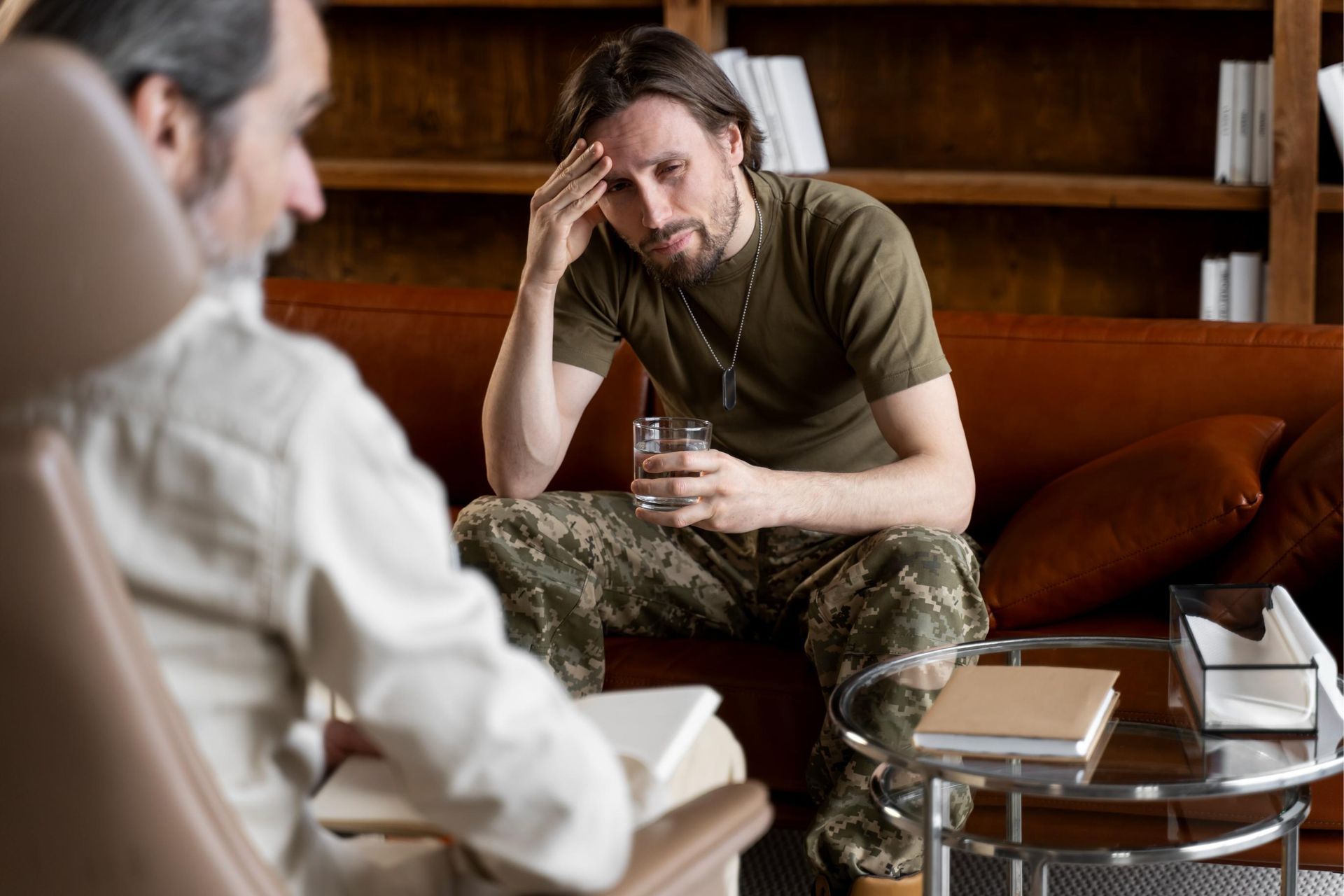
Veterans often carry stress, trauma, pain, and sleep problems long after service ends. Some have tried medication or counseling and still feel stuck, numb, on edge, or disconnected from the people around them. A professional wellness center can help look at the full picture, including PTSD, depression, TBI, addiction, chronic pain, and the brain changes that may sit underneath those symptoms.
Unchained Psychiatry & Wellness works with veterans in Gilbert, Mesa, Chandler, Queen Creek, and the Phoenix East Valley. We accept Tricare and Triwest for eligible veterans and active duty military. To ask about care options, call (480) 536-9473 or request a free 15-minute consultation at unchainedwc.com/contact.
PTSD, TBI, and Depression Are Brain Injuries
PTSD is not a weakness or a failure to “move on.” Trauma can change how the brain reacts to threat, memory, emotion, and safety. That can show up as hypervigilance, anger, nightmares, emotional numbness, intrusive memories, or feeling distant from family and friends.
Traumatic brain injury can also affect mood, focus, sleep, personality, and decision-making. Blast exposure, physical trauma, and repeated impacts may leave lasting neurological effects. Treating only the outward symptoms may not be enough when the brain itself has been changed by injury or trauma.
TMS Therapy for Veterans with PTSD and Depression
TMS therapy uses magnetic pulses to stimulate areas of the brain involved in mood and emotional regulation. It is done in the office, does not require anesthesia, and does not involve medication circulating throughout the body. Patients can drive themselves home after each session.
TMS is FDA-cleared for Major Depressive Disorder and OCD, and it is also being studied and used clinically in trauma-related care. For veterans who do not want to talk through traumatic memories in every session, TMS may feel more approachable. We use MagVenture technology and adjust treatment settings for each patient.
Ketamine and Spravato for Treatment-Resistant Depression and PTSD
Many veterans have already tried several medications before they come to us. When depression or PTSD symptoms are not improving enough, ketamine therapy may be considered. Ketamine works through a different brain pathway than many standard antidepressants.
Spravato, also called esketamine, is FDA-approved for treatment-resistant depression and is given in the office under clinical monitoring. The psychiatric team reviews each patient’s history before recommending ketamine, Spravato, TMS, medication management, or another option. The goal is to match care to the person, not force every veteran into the same plan.
Hyperbaric Oxygen Therapy for TBI and Neurological Recovery
Hyperbaric oxygen therapy, or HBOT, delivers high-concentration oxygen inside a pressurized chamber. It may be used as supportive care for people dealing with neurological inflammation, tissue recovery, chronic pain, neuropathy, or long-term effects from injury. For veterans with TBI concerns, it gives the care plan a physical recovery component alongside psychiatric support.
Sessions are non-invasive. Patients sit or recline in the chamber and breathe concentrated oxygen as the pressure increases. The most common sensation is ear pressure, similar to what people feel when flying or changing altitude.
NAD+ IV Therapy and Addiction Recovery
Addiction recovery can involve more than stopping a substance. Alcohol use, opioid use, and behavioral addictions can affect dopamine pathways, energy, sleep, and cravings. Veterans may also be dealing with pain, trauma, or depression at the same time.
NAD+ IV therapy may be used as part of a broader recovery plan to support cellular energy and brain chemistry recovery. IV delivery allows higher absorption than oral supplements. It is not a stand-alone addiction treatment, but it may support psychiatric care, TMS, and other recovery work when appropriate.
Insurance: Tricare and Triwest Accepted
Unchained Psychiatry & Wellness accepts Tricare and Triwest for eligible veterans and active duty military. We also accept Aetna, Cigna, Blue Cross Blue Shield, Medicare, UnitedHealthcare, Magellan, and Optum. Coverage depends on the service, diagnosis, and plan requirements.
Our staff verifies benefits before treatment begins. Veterans paying out of pocket can also ask about HSA, CareCredit, and Deferred financing. To check benefits or discuss care options, call (480) 536-9473 or request a free 15-minute consultation at unchainedwc.com/contact.
Related Topics: