
The Importance of Trauma Therapy for Healing in Gilbert
Navigation links
Free Consultation
It's important to know that you are not alone. Get help with depression today!
TMS THERAPY SUPPORTS MENTAL WELLNESS
- Depression
- Lack of Joy
- Sadness and Despair
- Low Mood
- Lethargy
- Insomnia
- Oversleeping
- Social Isolation
- Self-Harm
- Substance Abuse
- Suicidal Ideation
- Alcoholism


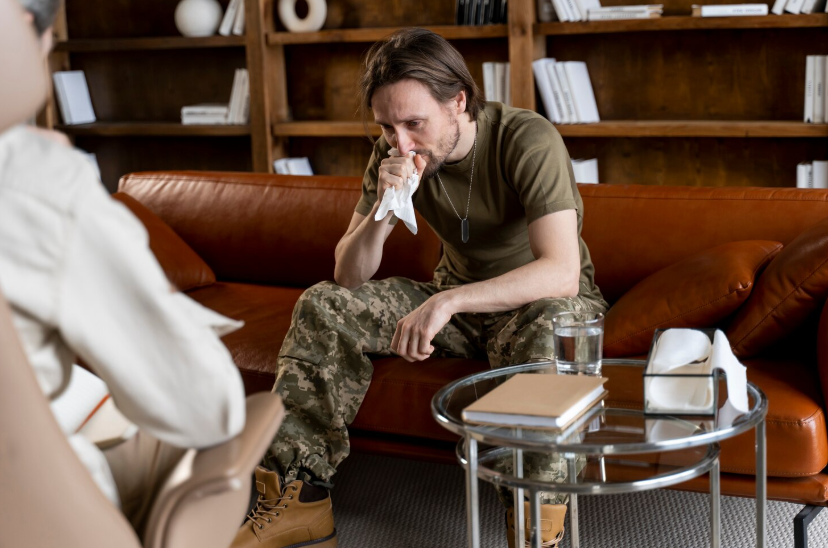
Trauma doesn't stay in the past. It lives in the nervous system, shapes how the brain responds to stress, and leaves a measurable biological footprint that standard talk therapy alone often can't fully reach. People who have done the work in therapy and still don't feel better are often telling the truth about their experience. The problem isn't effort. In many cases, the treatment hasn't addressed what trauma actually does to the brain and body.
An integrative approach at a professional wellness center addresses the neurological, inflammatory, and physiological dimensions of trauma alongside the psychological ones. That's where real recovery becomes possible.
What Trauma Does to the Brain and Body
Trauma rewires the brain's threat-response system. The amygdala, responsible for processing fear and threat, becomes overactive. The prefrontal cortex, responsible for rational thought, emotional regulation, and decision-making, loses its ability to moderate those amygdala responses. The result is a nervous system that remains in a state of chronic alertness long after the original threat has passed.
Physically, trauma disrupts the HPA axis (the body's primary stress hormone system), raises baseline cortisol levels, and contributes to neuroinflammation. Chronic trauma exposure is associated with structural changes in the hippocampus and amygdala that affect memory, emotional processing, and behavioral regulation.
Trauma doesn't just show up as flashbacks and nightmares. It shows up as:
- Persistent physical tension and hypervigilance
- Disrupted sleep
- Emotional numbness or rapid emotional swings
- Difficulty maintaining relationships or functioning under pressure
- Unexplained physical symptoms, including chronic pain, GI issues, and fatigue
Addressing these symptoms requires reaching the neurobiological roots, not only the narrative around them.
Why Talk Therapy Alone Is Sometimes Not Enough
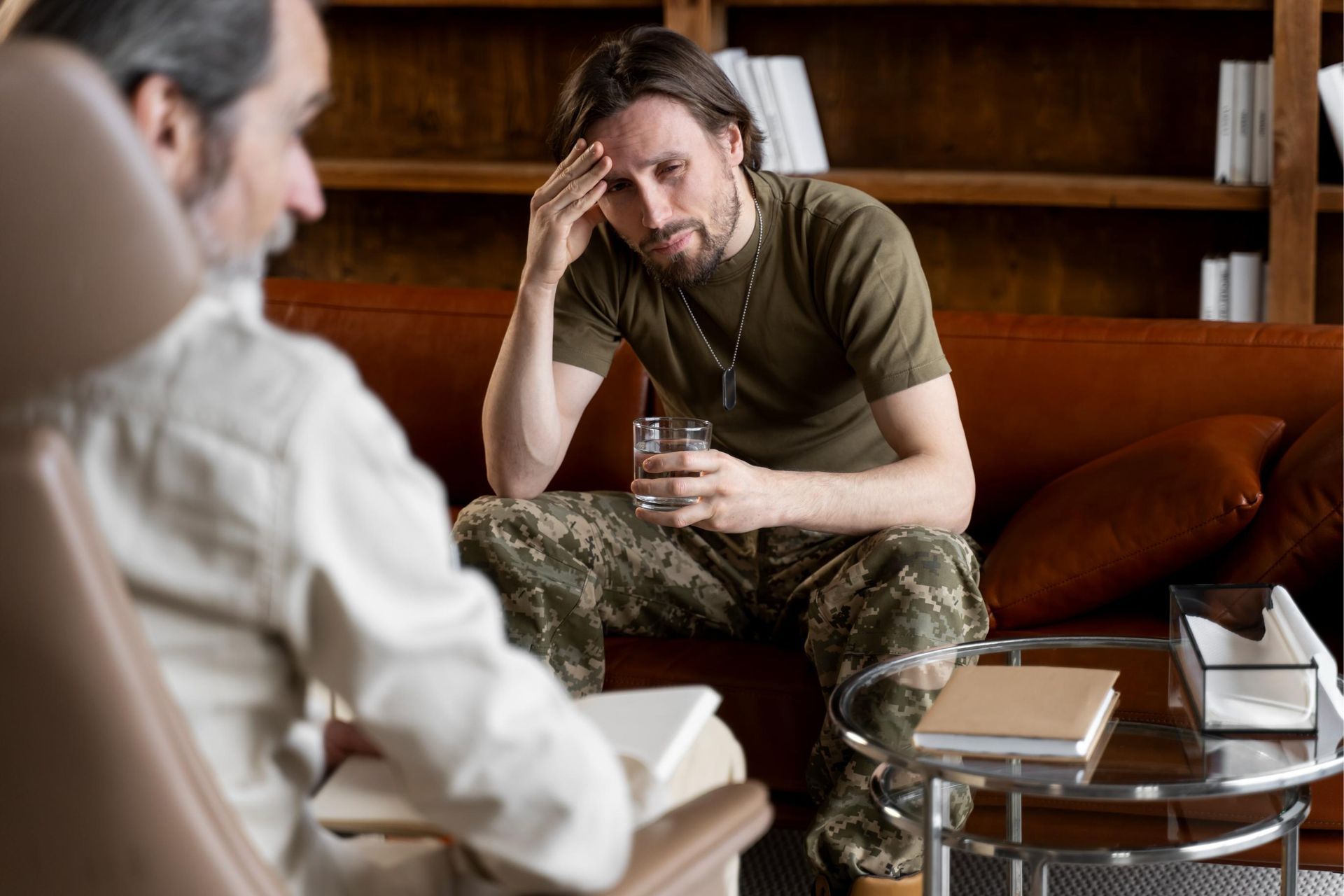
Cognitive and narrative therapies are valuable. For many patients with trauma, they are a core component of recovery. But for patients with complex or chronic trauma, particularly veterans, first responders, and survivors of prolonged abuse, talk therapy sometimes reaches a ceiling.
The reason is biological. The trauma response lives below the level of conscious thought. It's embedded in automatic nervous system reactions that can't be reasoned away. A patient can fully understand the cognitive distortions behind their anxiety and still feel unsafe in their own body. Verbal processing doesn't reliably reach the hyperactive amygdala or restore prefrontal regulation on its own.
Neuromodulation and integrative therapies work through different mechanisms, targeting the brain and nervous system directly rather than through language alone. For many patients with complex trauma histories, this is where the missing piece has been.
TMS Therapy for Trauma and PTSD
TMS (Transcranial Magnetic Stimulation) uses magnetic pulses to stimulate the dorsolateral prefrontal cortex, the region of the brain that becomes underactive in both depression and PTSD. Restored activity in this region helps strengthen the prefrontal-amygdala connection that trauma disrupts.
Our TMS therapy for depression and OCD uses the MagVenture system, a precision platform used in clinical research settings. It is FDA-cleared for major depressive disorder and is studied for PTSD as part of integrative psychiatric protocols. Patients with trauma-related depression who haven't responded to antidepressants are often strong candidates, especially when PTSD and depression co-occur.
TMS is non-invasive, requires no sedation, and carries no systemic side effects. Sessions run 20 to 40 minutes, and patients return to normal activity immediately after. A standard course runs 4 to 6 weeks with five sessions per week. Accelerated TMS is available for patients who need a compressed timeline.
Ketamine and Spravato for Trauma-Related Depression
Ketamine works through NMDA receptor antagonism, a mechanism completely different from SSRIs or SNRIs. It produces rapid antidepressant effects, often within hours, and appears to promote neuroplasticity in areas of the brain affected by chronic stress and trauma.
Spravato (esketamine) is FDA-approved for treatment-resistant depression and is administered in-clinic under medical observation. Ketamine IV infusions work faster and are used for patients in acute distress or those who need more immediate relief while a longer-term protocol is developed.
Our Spravato and ketamine IV for treatment-resistant depression offering integrates both options. For many trauma patients, combining ketamine with TMS produces better outcomes than either approach alone. Ketamine creates a window of neuroplasticity that TMS can then help consolidate over the treatment course.
Hyperbaric Oxygen Therapy and Neuroinflammation
Neuroinflammation is a significant and often overlooked factor in PTSD and trauma-related conditions. Chronic activation of the brain's immune response contributes to hippocampal damage, disrupted neurotransmitter function, and worsened emotional regulation.
Our hyperbaric oxygen therapy for TBI and neurological recovery drives oxygen deep into brain tissue at pressures not achievable through normal breathing. The result is new blood vessel formation, reduced neuroinflammation, and accelerated cellular repair. For trauma patients where neuroinflammation is a significant driver of symptoms, HBOT is a clinically grounded adjunct to psychiatric and neuromodulation treatment.
A Whole-Person Approach to Trauma Recovery
Trauma recovery doesn't follow a single track. Patients who see the best results are often those whose treatment plan addresses multiple systems at once: neurological regulation, inflammation, gut-brain axis function, and nervous system resilience.
Modalities we incorporate into trauma recovery plans include:
- Cold plunge therapy: Brief cold immersion builds nervous system resilience and regulates the stress-response system over time. Particularly useful for patients with chronic hypervigilance and tension.
- Infrared sauna (Sunlighten mPulse): Supports inflammation reduction and parasympathetic nervous system activation through clinically studied infrared wavelengths.
- NAD+ IV therapy: Supports cellular energy and neurological function. Used in recovery protocols where fatigue and cognitive fog are significant.
- Genetic testing: Identifies CYP450 enzyme variants that explain why certain medications haven't worked, allowing our clinical team to select more targeted pharmacological options.
None of these replaces psychiatric care. They support it. For many patients, the combination produces results that a single-modality approach couldn't achieve.
What to Expect When You Start Trauma Treatment
The first appointment is a consultation. A provider reviews your history, current symptoms, prior treatments, and goals. From that, an individualized plan is built.
For patients with PTSD or complex trauma, the plan may include TMS, ketamine, or Spravato, HBOT, and adjunct wellness support. It may start with a psychiatric evaluation while insurance verification for TMS is completed. The sequence is explained at the consultation, so you know what to expect and why each step is in place.
We accept most major insurance plans, including Aetna, Cigna, Tricare, Triwest, BCBS, Medicare, and United Health Care. Coverage is verified before treatment begins. No referral is required.
One patient's experience captures what we hear often: "I suffered from depression for 15+ years and tried the usual drugs, including Prozac and Celexa, but they made me feel like a zombie. After just 3 sessions, the improvement was remarkable." Oliver's experience reflects what's possible when treatment finally matches what's actually happening in the brain.
Related Topics: